 Kinnetly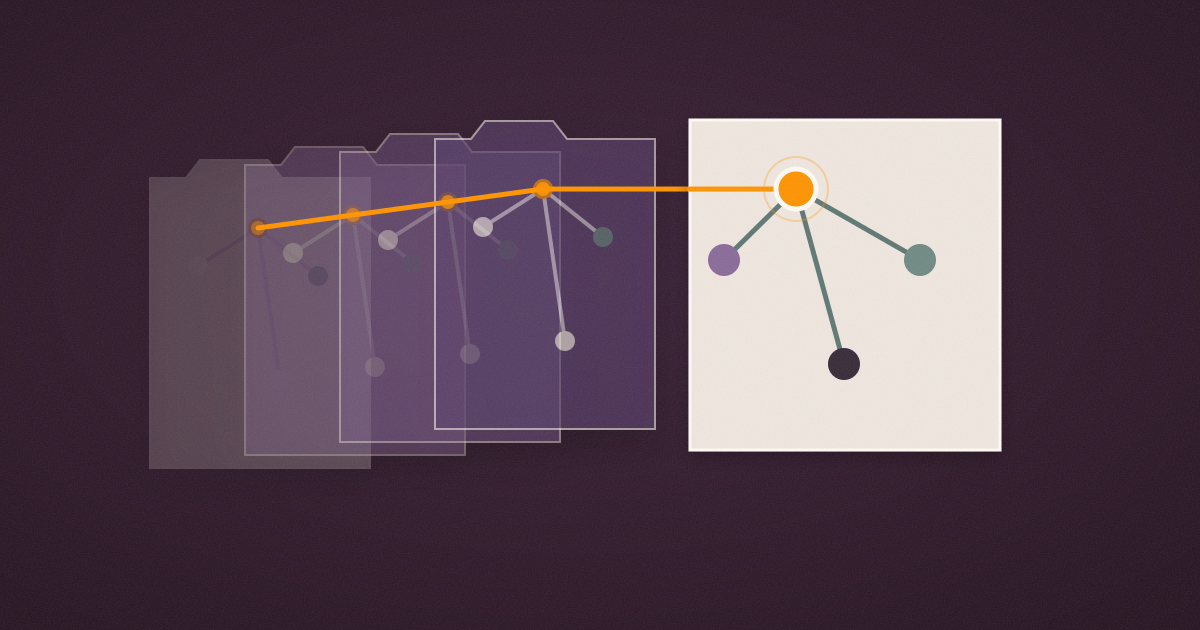
A personal CRM archive is for the contacts you do not need in front of you every week, but do not want to lose. It keeps the active part of your relationship system clean while preserving the history that may matter later.
That distinction matters. Most people do not stop using a personal CRM because they run out of contacts. They stop because the useful signal gets buried under old names, stale notes, duplicate records, and relationships that are no longer active.
Deleting everything feels too harsh. Keeping everything visible creates noise. Archiving gives you a middle path.
Archive old contacts instead of deleting them
Some relationships are clearly active: current clients, recent introductions, people you are meeting soon, and the handful of friends or peers you want to keep close.
Others are harder to classify. A former colleague. Someone you met at an event two years ago. A consultant you might recommend one day. An investor who passed last round, but said to stay in touch later.
If you delete those records, you lose more than a name. You lose the context around the relationship: where you met, who introduced you, what you spoke about, and why they mattered at the time.
Records managers make a similar distinction between active records and archived records. The point of an archive is not to throw information away. It is to preserve it in a way that stays findable later. Harvard Medical School's data management guidance describes archives as a way to keep records that still have long-term value, even when they are no longer used day to day: https://datamanagement.hms.harvard.edu/store-evaluate/archives-and-records-management
Your personal network is not a corporate records system, but the principle still works. Some relationship history should move out of the daily workspace without disappearing.
Clutter makes follow-up harder
A personal CRM only helps if you trust it enough to use it.
When every search returns too many half-relevant people, you hesitate. When your graph is crowded with contacts you have not spoken to in years, the important nodes are harder to see. When your follow-up list includes people who should not be active anymore, reminders start to feel like nagging.
That is not just tidiness for its own sake. Research on information overload has long connected excess information with poorer decisions and more effort from the person trying to sort through it: https://pmc.ncbi.nlm.nih.gov/articles/PMC8567038/
In a personal CRM, the practical version is simple: too many active contacts makes it harder to notice the right next action.
Archiving reduces the active set. You can keep the relationships that need attention in view, while moving quieter relationships into storage until they are relevant again.
Dormant does not always mean unimportant
A dormant relationship is not a failed relationship. Often it is just a relationship that has no current reason to be active.
That matters because good networks are seasonal. A person who is not relevant this month might matter next year when you change roles, start a project, look for advice, or want to make a thoughtful introduction.
The mistake is treating dormancy as a reason to erase the relationship.
A better system asks two questions:
- Do I need this person in my active view right now?
- Would I regret losing the history later?
If the answer is no to the first and yes to the second, archive them.
What to keep before you archive someone
Archiving works best when the record has enough context to be useful if it comes back later.
Before you archive a contact, check that you have the basics:
- where you met them
- who introduced you, if anyone did
- the company, event, or group connected to the relationship
- a short note about what they care about or what you discussed
- any follow-up commitment you still need to honour
You do not need a biography. A few specific notes are enough.
For example: "Met at Brisbane founder dinner. Introduced by Priya. Runs finance ops for early-stage SaaS. Asked about SOC 2 contractors. Good person to reconnect with before the next security project."
That note is useful months later. "Met at event" is not.
Use tags and reminders before you archive
Not every quiet contact should be archived straight away.
Some people belong in the active map with a slower cadence. A mentor you speak with twice a year. A client from last year who still sends referrals. A former manager you want to keep warm.
For those, a tag or reminder may be better than an archive.
A simple rule helps:
- use a reminder when you want to contact them again
- use a tag when you want to group or find them later
- use the archive when you want them out of the active workspace, but still recoverable
This keeps archiving from becoming a dumping ground. It is a maintenance choice, not a way to avoid deciding.
How Kinnetly handles archived relationships
Kinnetly is built around a private relationship graph, so an old contact is rarely just an isolated card. They may be connected to a company, an event, a group, or the person who introduced you.
That is why archiving matters. It lets you keep your active graph easier to read without permanently deleting the history behind a relationship.
In Kinnetly, you can archive and restore contacts, use the dormant relationships view to spot relationships that have gone quiet, keep notes and activity history, and set follow-up reminders where a relationship should stay active. If a contact becomes relevant again, you can bring them back instead of rebuilding the record from memory.
It is a practical balance: your current network stays clearer, and your past context is still there when you need it.
A simple archive routine
You do not need a heavy cleanup process.
Once a month, scan your dormant relationships and ask:
- should I follow up with this person?
- should I keep them active but change the cadence?
- should I tag them for later?
- should I archive them?
Start with obvious cases. Former vendors you are unlikely to use soon. Event contacts with no current thread. Old prospects that are no longer active. People you remember, but do not need on the map right now.
Then stop. A good archive habit should make the system easier to use, not turn into another admin job.
Keep the history, clear the noise
Your personal CRM should not force you to choose between a messy active workspace and deleting relationship history.
Archive the people who are no longer active. Keep the notes that explain why they mattered. Restore them when life brings them back into view.
If you want a private place to manage that rhythm, you can get started with Kinnetly for free and archive old relationships instead of losing their context.