 Kinnetly
A useful conversation ends. You open your notes and write one dense paragraph:
Coffee with Maya on Monday. She is testing a new community workshop format. We talked about accessible venues. I said I would send the council venue list by Friday. She may run a pilot in November, but the date is not confirmed.
The words are there, but the record still leaves you work to do. Weeks later, you have to work out what happened, what remains true and whether you promised anything.
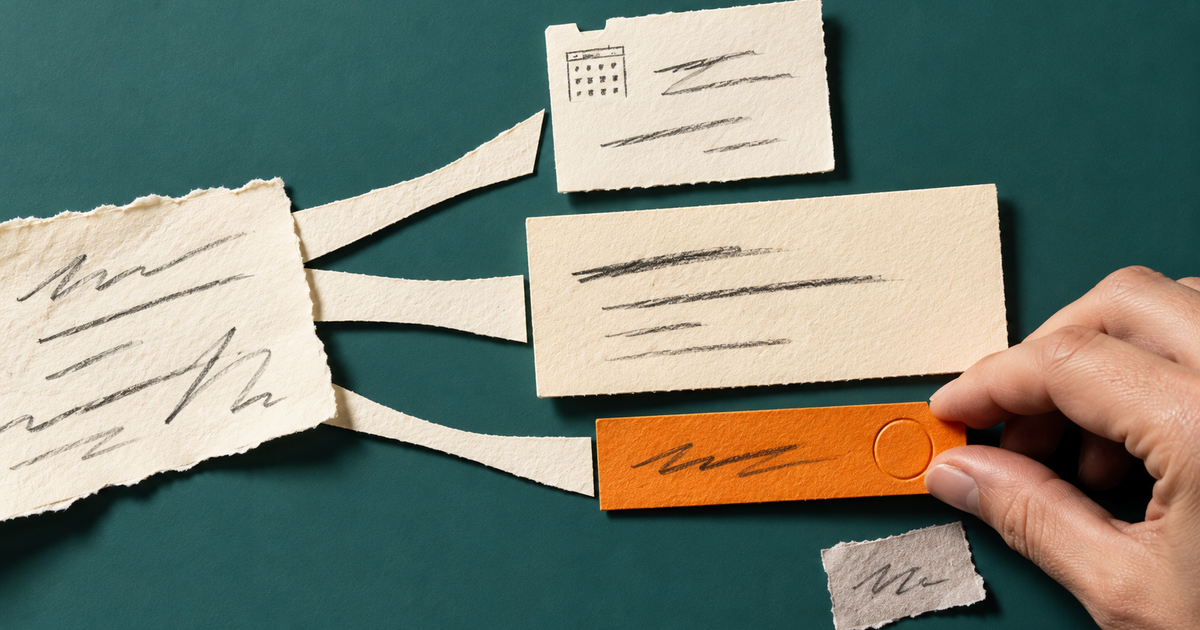
Good personal CRM conversation notes separate those jobs while the conversation is still recent. Keep the interaction in the activity history, save only useful long-term context, and turn a real commitment into its own reminder.
For Maya, that would look like this:
- Activity: Coffee on Monday. Discussed her workshop idea and accessible venues.
- Relationship context: Maya is exploring community workshop formats, with accessibility as a concern.
- Commitment: Send Maya the council accessible-venue list by Friday.
- Uncertainty: A November pilot is possible, not confirmed.
That small split makes the record easier to trust.
Personal CRM conversation notes need three different homes
A conversation note is a selective record, not a transcript. Its job is to preserve enough context for your future self without pretending that every sentence deserves a permanent place.
Research on conversational memory supports a restrained approach. A small study of 21 conversational pairs found that people who wrote a detailed memorandum soon after a conversation later recalled more of it. Their recall was not more accurate, and after one week the two people often remembered different details. The practical lesson is modest: capture useful distinctions early, but do not treat your note as a perfect account.
The three parts solve different problems:
- Activity history records what happened at a point in time.
- Relationship context keeps facts that may help later.
- A reminder carries a specific future action.
Putting them in one paragraph preserves the prose. Separating them preserves their purpose.
Keep the interaction in the activity history
An activity answers a few factual questions. When did you speak? What kind of interaction was it? What did you discuss? Who initiated it, if that matters?
Keep the language tied to that moment.
“Considering a move to Melbourne in October” belongs in a dated activity. Changing a permanent profile field to “Lives in Melbourne” would turn a possibility into a fact. “Exploring a workshop” is different from “launching a workshop”.
This matters because circumstances change. A dated activity can remain true as history even when the plan changes later. It tells you what was discussed without silently overwriting newer information.
Write enough to recognise the interaction, then stop. Two or three concrete points will usually beat a polished summary that blurs what was said, inferred or promised.
Promote only context that earns a longer life
Some details are useful beyond the dated conversation. They may explain how you know the person, what they are working on, or why a topic could matter next time.
Before turning a conversational detail into durable context, run four checks:
- Useful: Will this make a future interaction more accurate or considerate?
- Supported: Did the person say it, or am I making an inference?
- Current: Is it stable enough to treat as present context?
- Appropriate: Is keeping it proportionate to this relationship?
A current project the person chose to discuss may pass all four checks. A guess about their motives will not. A tentative date may be worth keeping in the activity, but not as a lasting profile fact.
Durable context can also explain the relationship itself. You may want to connect the person with the company, group, event or introducer that brought you together. That is often more useful than another sentence in a notes field because it gives the relationship a place in your wider map.
There is no prize for saving more. If a detail would not change how you prepare, follow through or understand the relationship, it probably does not need a permanent place. This is the same restraint behind keeping personal CRM notes useful without crossing a line.
Give each real commitment its own reminder
Remembering a past event and remembering to act in the future are different memory problems. The American Psychological Association calls the second one prospective memory: remembering to carry out an intended action later.
That is why “I said I would send the venue list on Friday” should not stay buried inside the coffee note. Give it a separate reminder that names:
- the owner
- the action
- the person it is for
- the timing, if one was actually agreed
- enough context to explain the promise
Compare these two reminders:
Follow up with Maya.
Send Maya the council accessible-venue list by Friday. Promised during Monday's coffee about her possible workshop pilot.
The second version removes a decision from Friday. You already know what to send and why.
Research on prospective memory also suggests that a cue works best when it attracts attention and arrives when action is possible. You do not need an elaborate system to apply that idea. Use a date when there is a real date. If the trigger is an event, name the event instead of inventing a deadline.
And do not turn every interesting detail into a task. “Maya likes architecture books” is context, if it is relevant and appropriate to retain. “Send Maya the Brisbane modernism guide on Friday” is an action.
Preserve who said what
A quick summary can make tentative language sound settled. It can also assign the wrong owner to a promise.
Keep these distinctions visible:
- I offered: I said I would introduce Maya to Jordan.
- They offered: Maya offered to send the venue checklist.
- We discussed: We discussed a possible introduction to Jordan.
- Tentative: Maya may hold a pilot in November.
- Confirmed: The pilot is booked for 12 November.
This check matters when you dictate a note or use software to extract a proposed activity and reminder. Review the result before saving it. A tidy sentence is still wrong if it turns a possibility into an agreement.
“Nothing to do” is a useful result
A good conversation does not always create an open loop.
You might log the activity, save one piece of durable context and create no reminder. That is often the right record.
Treating every contact as a task makes genuine commitments harder to see. It can also turn ordinary professional relationships into an outreach queue. Specific promises belong in one-off reminders. A recurring stay-in-touch rhythm is a different choice, useful only when you actually want that cadence.
The distinction also makes a later personal CRM review easier. You can deal with real promises first instead of sorting them from a pile of vague “check in” prompts.
Use more restraint with sensitive information
Relationship notes can contain personal information. Some conversations also touch on health, beliefs or other sensitive subjects. The Office of the Australian Information Commissioner describes these categories as receiving higher privacy protection under Australian privacy law.
This article is not legal advice, and not every individual note-taker has the same legal obligations. The everyday standard can still be simple: keep what supports the relationship or a real commitment, prefer the person's own words, and leave out gossip, diagnoses, personality scoring and unnecessary third-party details.
Something being mentioned does not automatically make it useful to store. Correct or remove context when it is no longer accurate or needed.
Try the three-minute conversation notes routine
Do this while the interaction is fresh.
Minute 1: log the activity
Record the person, date and interaction type. Add two or three concrete points about what happened. Keep tentative claims tentative.
Minute 2: extract durable context
Choose at most one fact or connection likely to help later. Link the relevant company, group, event or introducer when that explains the relationship better than prose.
Minute 3: isolate the commitment
Create one dated reminder if a real action exists. Name the owner, action, person and context. If there is no action, write none.
Use this compact template:
Activity: [what happened, when]
Context: [what remains useful later]
Commitment: [owner + action + date, or none]
Uncertainty: [anything tentative that must stay tentative]
The point is not to fill every line. It is to stop one kind of information from pretending to be another.
Keep context and commitments distinct in Kinnetly
Kinnetly gives personal CRM conversation notes a few clear places to live. A timestamped activity records the interaction. Private notes can hold durable context on a person, company, group or event. A one-off reminder keeps a specific promise open until you mark it done. Search helps you find the notes and activity descriptions later, while the relationship graph preserves where the person fits.
Kinnetly does not read your inbox or calendar, and it does not decide what matters. You choose what to record and review what is saved.
Take one recent conversation and sort it into what happened, what matters later and what you actually promised. Try the workflow in your private Kinnetly relationship map.
Sources
- Brown-Schmidt and colleagues, “MEMCONS: How Contemporaneous Note-Taking Shapes Memory for Conversation”, Cognitive Science
- American Psychological Association, “Prospective memory”, APA Dictionary of Psychology
- Rogers and colleagues, “Reminders Through Association”, Psychological Science
- Office of the Australian Information Commissioner, “What is personal information?”